
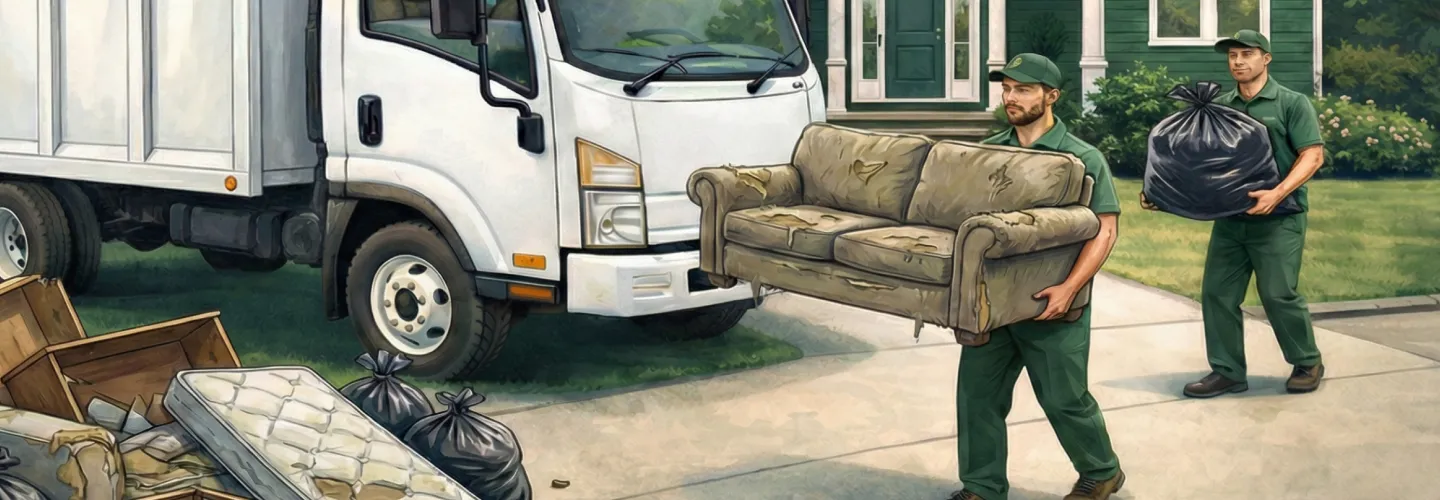
Smyrna Construction Debris Removal Services
Choose our Construction Debris Removal for fast, reliable service that keeps your site safe, organized, and ready for the next phase—saving you time and hassle.
Get a Free QuoteOur Smyrna Junk Removal Services
Construction Debris Removal in Smyrna, GA – Local Service Guide
Construction debris removal in Smyrna, GA is essential for keeping homes and businesses safe, clean, and compliant with local regulations. In neighborhoods like Williams Park and Forest Hills, residents often need debris removal after home renovations, appliance upgrades, or seasonal cleanouts. Typical triggers include spring cleaning, storm recovery, or replacing large items such as mattresses or hot tubs. Options for disposal range from donation and recycling to scheduled pickups, with logistics influenced by driveway access, weather, and item size. For residential spaces like garages and yards, cleanouts often follow heavy rains or leaf fall, especially in areas with dense tree coverage or flood-prone lots. Commercial properties in Smyrna’s Village Green or along Atlanta Road face unique needs, such as discreet, timely removal for offices, restaurants, or construction sites, often requiring coordination to minimize business disruption. Specialty services—like dumpster rentals or estate cleanouts—are vital for larger projects, foreclosures, or hoarding situations, demanding careful planning and compliance with city guidelines. For more on local rules and resources, visit the Smyrna Public Works Department.
Key Considerations for Construction Debris Removal in Smyrna
- Timing around local events, weather, and project schedules
- Required permits for large-scale or specialty removals
- Approved disposal and recycling channels
- Site access and parking limitations in older neighborhoods
- Volume estimates for efficient hauling and cost control
- Coordination with city services for compliance and safety
Benefits of Construction Debris Removal in Smyrna
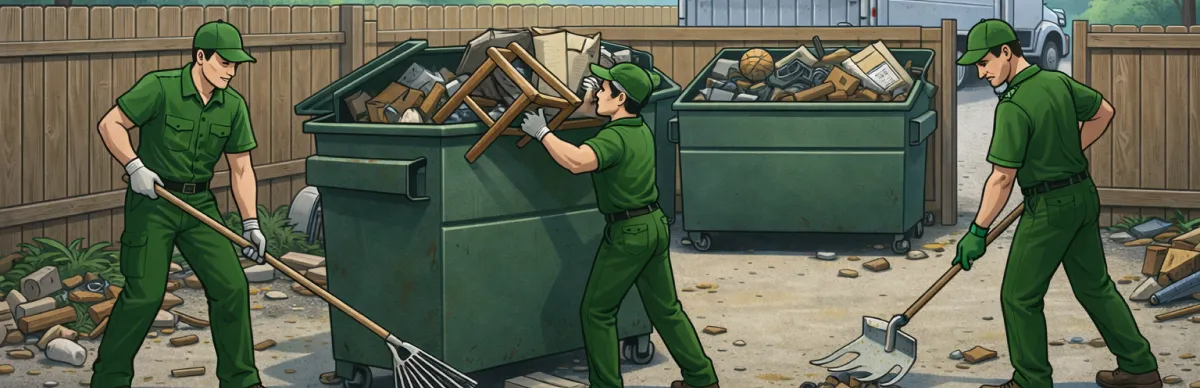
Fast Construction Site Cleanup
Safe Debris Disposal
Eco-Friendly Waste Management
Compliance With Local Regulations
Improved Job Site Safety
Flexible Scheduling Options
Coordinating Construction Debris Removal with Smyrna's Public Works Department
Construction and demolition (C&D) debris generated from renovation, remodeling, or demolition projects in Smyrna must be managed in accordance with municipal solid waste regulations. The Smyrna Public Works Department oversees sanitation services and can direct residents and contractors toward approved disposal methods for construction materials. Key considerations for C&D debris removal in Smyrna include:
- Prohibited curbside disposal — construction debris such as lumber, drywall, concrete, and roofing materials is generally not accepted through regular residential trash collection
- Hauler responsibility — contractors and property owners are responsible for transporting C&D waste to licensed disposal or recycling facilities
- Load securing — all debris must be properly covered and secured during transport to prevent roadway littering, per city ordinance
- Scheduling coordination — large-scale removal projects should be coordinated with the Public Works Department to avoid conflicts with residential collection routes
Smyrna Public Works Department
2800 King Street, Smyrna, GA 30080
Phone: (770) 434-6600
Official Website: Smyrna Public Works Department
Smyrna Building Permits and Code Compliance for Demolition and Renovation Debris
Any construction project in Smyrna that generates significant debris typically requires a building permit issued through the Smyrna Building Division. Permit applications are reviewed for compliance with local building codes, zoning requirements, and waste management plans. Residents and contractors should be aware of the following requirements:
- Building permits are required for structural demolition, major renovations, roof replacements, and additions that produce C&D waste
- Demolition permits may require documentation of asbestos inspection results for structures built before 1980, in accordance with federal and state regulations
- Site cleanliness — active construction sites must maintain debris containment to prevent material from migrating onto adjacent properties or public rights-of-way
- Code enforcement — the Smyrna Community Development Department monitors construction sites for compliance with permit conditions, including proper debris management
Failure to obtain required permits or maintain compliant job sites may result in stop-work orders and municipal fines.
Smyrna Building Division
2800 King Street, Smyrna, GA 30080
Phone: (770) 434-6600
Official Website: Smyrna Building Division
Georgia's Solid Waste Management Act and Construction Debris Disposal Requirements
Construction and demolition debris disposal in Smyrna is governed at the state level by the Georgia Comprehensive Solid Waste Management Act (O.C.G.A. § 12-8-20). The Georgia Environmental Protection Division (GA EPD) regulates solid waste facilities, including C&D landfills and recycling operations. Important state-level requirements include:
- Permitted facilities only — all C&D waste must be delivered to facilities holding a valid solid waste handling permit from GA EPD
- Inert waste landfills — clean concrete, brick, block, and asphalt may be accepted at inert waste landfills, which have separate permitting from municipal solid waste landfills
- Asbestos-containing materials — must be handled by licensed abatement contractors and disposed of at facilities authorized to accept regulated asbestos-containing material, per EPA National Emission Standards for Hazardous Air Pollutants (NESHAP)
- Lead-based paint debris — renovation of pre-1978 structures requires compliance with the EPA Renovation, Repair, and Painting Rule
- Illegal dumping penalties — unauthorized disposal of C&D waste carries fines and potential criminal charges under Georgia law
Material Sorting and Recycling Obligations for Smyrna Construction Projects
Responsible construction debris management in Smyrna includes separating recyclable materials from general waste to reduce landfill burden and support environmental stewardship. The Keep Smyrna Beautiful & Environmental Services program promotes recycling and waste diversion throughout the community. Contractors and homeowners should implement the following sorting practices:
- Concrete, brick, and masonry — can be crushed and recycled as aggregate for road base and fill material at licensed C&D recycling facilities
- Scrap metal — steel framing, copper wiring, aluminum flashing, and other metals should be separated for scrap recycling
- Clean wood — untreated dimensional lumber and pallets may be accepted at wood recycling or mulching facilities; treated or painted wood requires separate disposal
- Roofing shingles — asphalt shingles are recyclable at specialized facilities that process them into road paving material
- Drywall and gypsum — some facilities accept clean drywall for recycling; contaminated or painted drywall may require standard C&D landfill disposal
- Cardboard and packaging — all packaging materials from construction supplies should be recycled through standard recycling channels
Proper on-site sorting reduces disposal costs and supports Smyrna's broader waste diversion goals.
Stormwater Protection and Erosion Control During Debris Removal in Smyrna
Construction debris removal activities in Smyrna must comply with stormwater management regulations to prevent sediment and pollutants from entering local waterways. The Smyrna City Engineer oversees erosion and sediment control requirements for construction sites. Key environmental compliance measures include:
- Erosion and sediment control plans — required for land-disturbing activities; debris removal sites must maintain silt fences, sediment barriers, and stabilized construction entrances
- Stormwater runoff prevention — loose debris, dust, and fine particles must be contained to prevent discharge into storm drains, which flow untreated into local creeks and the Chattahoochee River watershed
- Washout containment — concrete washout areas must be designated and maintained away from storm drains and waterways
- Georgia Erosion and Sedimentation Act — enforced locally through Smyrna's land development regulations; violations may result in fines and mandatory corrective action
- Inspection compliance — active sites are subject to inspection by city engineering staff to verify erosion control measures are properly installed and maintained
Smyrna City Engineer
2800 King Street, Smyrna, GA 30080
Phone: (770) 434-6600
Official Website: Smyrna City Engineer
What Neighborhoods Do We Serve Throughout Smyrna, GA?
- Vinings: Upscale residential properties with frequent renovation and remodeling projects generating significant C&D debris. Narrow, winding roads in some areas may require smaller vehicles for debris hauling, and proximity to the Chattahoochee River demands strict erosion and sediment control compliance.
- Belmont Hills: Established single-family homes built in the mid-20th century, where kitchen and bathroom remodels are common. Pre-1978 structures may require lead paint and asbestos assessments before demolition debris removal begins.
- Smyrna Market Village Area: Mixed-use commercial and residential district with active redevelopment. Construction debris removal must be coordinated around pedestrian traffic and business operations, with attention to right-of-way access and noise ordinance compliance.
- King Springs: Family-oriented neighborhood with ranch-style homes undergoing modernization projects. Wide residential streets generally accommodate debris removal vehicles, though HOA guidelines may govern job site appearance and debris staging.
- Covered Bridge: Newer subdivision with contemporary construction where renovation debris tends to include modern materials such as composite decking and engineered wood. Community covenants may require advance notification for extended debris removal operations.
- Oakdale: Diverse residential area with a mix of older and newer housing stock. Varying lot sizes and driveway configurations require site-specific planning for debris loading and truck access, particularly on cul-de-sac streets.